Showing posts with label ... Neurological-Cognitive-Psychosocial Disorder. Show all posts

11 March 2009

Child Abuse


The term of child abuse is involved emotional or physical abuse or neglect, sexual exploitation or molestation by caretakers or other individuals.

Signs and Symptoms of Physical Abuse:
  • Bald spots on the scalp
  • Unexplained bruises, burns, or fracture
  • Apprehensive child
  • Fear of parent
  • Extreme aggressiveness or withdrawal
  • Lack of crying when approached by a stranger

Signs and Symptoms of Physical Neglect:
  • Poor hygiene
  • Consistent hunger
  • Inadequate weight gain
  • Constant fatigue
  • Inconsistent school attendance
  • Delinquency
  • Reports of lack of child supervision

Signs and Symptoms of Emotional Abuse:

  • Speech disorders
  • Psychoneurotic reactions
  • Learning disorder
  • Suicide attempts
  • Habit disorders: sucking, biting, and rocking

Signs and Symptoms of Sexual Abuse:
  • Difficulty walking or sitting
  • Torn, stained or bloody under-clothing
  • Pain swelling or itching of the genitalia
  • Poor peer relations
  • Bruises, bleeding, or lacerations in the genital or anal area
  • Unwillingness to change clothes

Shaken Baby Syndrome:
  • Intracranial hemorrhage
  • Full bulging fontanelles and head circumference greater than expected

Nursing Interventions:
  1. Assess any possible injuries
  2. Support the child during a physical assessment
  3. Report case of suspected abuse
  4. Place the child in an environment that is safe
  5. Document the objective manner information
  6. Assess parent's strength and weakness in dealing with stress
  7. Assist the family in identifying stressor, support systems, and resources
  8. Refer the family to appropriate support groups

Tourette's Disorder


Tourette's Disorder is a disorder that is characterized by recurrent involuntary and rapid movement affecting various parts of the body, accompanied by vocal noises such as barks, grunts, or profanities. It appears between ages 2 and 5.

Nursing Interventions:
  • One-to-one relationship
  • Protect the child from harm
  • Allow the child to have a favorite toy or other object
  • Maintain eye contact
  • Provide positive reinforcement for appropriate behaviors
  • Assess suicide potential
  • Remove dangerous objects from the environment
  • Limit on socially inappropriate or manipulative behaviors
  • Provide non-competitive group situations.

Attention-Deficit Hyperactivity Disorder


Attention-Deficit Hyperactivity Disorder (ADHD) is a disorder in child that is characterized by developmentally inappropriate degrees of inattention, overactivity, and impulsivity. The diagnosis is established base on self-reports, parent, and teacher report, and psychological assessments.

The child with Attention-Deficit Hyperactivity Disorder may probably has childhood problems such as lowered intellectual development, some minor physical abnormalities, sleeping disturbances, behavioral or emotional disorders, and difficulty in social relationships.

Signs and Symptoms:
  • Easily distracted with external or internal stimuli
  • Difficulty with following the instructions
  • Poor attention span
  • Talking excessively
  • Shifting from one uncompleted activity to another
  • Interrupting or intruding on others
  • Engaging in physically dangerous activities

Nursing Interventions:

  1. Encourage support group for parent
  2. Provide environmental and physical safety measures
  3. Enhance capabilities and self-esteem
  4. Administer medications as prescribed such as methylphenidate hydrochloride (Ritalin), pemoline (Cylert), and dextroamphetamine sulfate (Dexedrine)
  5. Inform the child and parent that the effects medication may come with in 1-2 weeks if taken as prescribed

8 March 2009

Autism


Autism is a severe mental disorder begins in infancy or toddler-hood. It is characterized by impairment of reciprocal social interaction and in verbal and non-verbal communication. The cause of autism is unknown and the prognosis is poor, however, the diagnosis can be established through the symptoms and specialized autism assessment tools

Signs and Symptoms of Autism:
  • Abnormal responses of body sensations
  • Disturbance in the rate ad appearance of physical, social, and language skills
  • Abnormal ways in relating to persons, objects, and events
  • Self-absorbed and unable to relate to others
  • The child may play happily alone for hours but have temper tantrums if interrupted
  • Repetition of previously heard speech meaninglessly and reversal of the pronouns "I" and "you"
  • Unusual attachment to a significant object and display frequent rocking, spinning, twirling, or other bizarre behaviors

Nursing Interventions:

  1. Identify the child routines, habits, and preferences, and maintain consistency as much as possible
  2. Observe the specific ways in which the child communicates
  3. Encourage communication through the use of picture boards
  4. Provide safety environment and safety precautions
  5. Observe for stress and anxiety
  6. Avoid placing demands on child
  7. Initiate referrals to special programs as required
  8. Provide support for child's parents

Mental Retardation

Mental retardation is a condition that is characterized by a below-average score on a test of mental ability or intelligence and limitations in the ability to function in daily life, such as communication, self-care, and getting along in social situations and school activities.


Signs and Symptoms of Mental Retardation:
  • Cognitive skills and level of adaptive functioning are in under level of normal
  • Speech delays
  • Fine-motor and gross-motor are delayed
  • Decreased spontaneous activity
  • Irritability
  • Non-responsiveness
  • Poor eye contact during feeding

Nursing Interventions:
  1. Promote care skills as much as possible
  2. Facilitate appropriate playtime
  3. Assist the child in communication and socialization skills
  4. Provide safety precaution as necessary
  5. Assist the family with decisions in relation to care
  6. Provide information about support services and community agencies

Cerebral Palsy


Cerebral palsy is a condition that is characterized by impaired movement and posture due to an abnormality in the extra-pyramidal or pyramidal motor system.

Signs and Symptoms of Cerebral Palsy:
  • Feeding difficulties
  • Extreme irritability and crying
  • Stiff and rigid arms or legs
  • Abnormal motor performance
  • Delayed gross development
  • Muscles tones alterations
  • Abnormal posturing (such as episthotonic)
  • Persistent of primitive infantile reflexes

Nursing Interventions:
  1. Assess the child's developmental level and intelligence
  2. Encourage the child in early intervention and participation in school programs
  3. Communicate and interact with the child on his/her developmental level
  4. Prepare for using mobilizing devices
  5. Provide a safe environmental
  6. Provide safe and appropriate toys for age and developmental levels
  7. Place the child upright after meals
  8. Administer medication as prescribed

Seizure Disorder

Seizure is defined as a sudden, transient alteration in brain function due to excessive levels of electrical activity in the brain. It can be classified as partial or generalized, or unclassified, that is depended on the area of the brain involved.

Nursing Assessment of Seizure in Child
  • Obtain information from the parent about the onset time, precipitating events, and behavior before and after the seizure.
  • Assess the child's history in relation to seizures.

Seizure Precautions:
  • Raise the side rails when the child is sleeping or resting
  • Place a waterproof mattress or pad on the bed or crib
  • Pad the side rails and other hard object
  • Instruct child to wear medical identification
  • Instruct the child about precaution during potentially hazardous activities
  • Instruct the child not to swim without a companion
  • Instruct the child to wear a helmet and padding during bicycle riding, skateboarding, and inline skating
  • Alert caregivers to the need for any special precautions

Emergency Treatment for Seizures:

  1. Ensure airway patency
  2. Identify time of seizure episode
  3. If the child is in sitting or standing position, ease the child down to the floor, placing the child in a side-lying position
  4. Place a pillow or folded blanket under the child's head, or place your own hands under the child's head, or place the child's head in your own lap
  5. Loose the child's clothes
  6. Remove eye glasses if present
  7. Clear area from any hazard or hard objects
  8. Allow seizure to proceed and end without interference
  9. Turn child to one side (as a unit) if vomiting
  10. Do not restrain the child, place anything in the child's mouth or give any food or liquid to the child
  11. Remain with the child until the child fully recovers
  12. Prepare to administration some medication as prescribed
  13. Observe for incontinence
  14. Document the occurrence

3 December 2008

Meningitis in Children


Meningitis is an infection in the nervous system. It can be caused by bacteria and virus or complication from neurosurgery, trauma, and infection in sinus or ears.

Meningococcal meningitis occurs in epidemic form and transmitted by droplet infection from nasopharyngeal sections. Viral meningitis is associated with viruses such as mumps, paramyxovirus, herpes virus, and enterovirus.

The diagnoses of meningitis is made by testing cerebrospinal fluid that shows increased pressure, cloudy, high of protein, and low glucose.

Signs and Symptoms:
  • There are no classic signs and symptoms. It depends on the type, child age, and duration of illness.
  • Vomiting and diarrhea
  • Fever, chills
  • Nuchal rigidity
  • Poor feeding or anorexia
  • Alter level of consciousness
  • Bulging anterior fontanel in infant
  • Muscle or joint pain
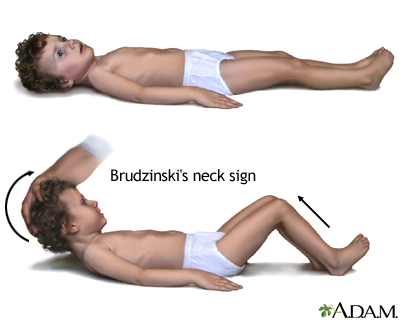
  • Kernig's sign and Brudzinski's sign


Nursing Intervention:
  • Isolation for at least 24 hours after antibiotic initiated
  • Administer antibiotics as prescribed
  • Assess neurological and cardiovascular system
  • Monitor intake and output

Reye's Syndrome


Reye's syndrome is acute encephalopathy follows a viral illness. It is characterized by cerebral edema and fatty changes in the liver. The disease is associated with administration of aspirin. The main goal of treatment is to maintain effective cerebral perfusion and control increasing Intra Cranial Pressure.


Signs and Symptoms:
  • History of viral illness 4-7 days before the onset of symptoms
  • Nausea and vomiting
  • Progressive neurological deterioration
  • Malaise
Nursing Intervention:
  • Assess and monitor neurological status
  • Monitor LOC and signs of increased ICP
  • Provide rest and decrease stimulation
  • Monitor intake and output
  • Monitor liver function
  • Monitor for signs of bleeding and impaired coagulation

Spina Bifida


Spina bifida is a defect in central nervous system. It occurs as a result from neural tube failure to close during embryonic development.

Type of Spina Bifida
1. Spina Bifida Occulta:
Posterior vertebral arches fail to close in the lumbosacral area. Spinal cord remains intact and usually is not visible. Meninges are not exposed on the skin surface and neurological deficit are not usually present.

2. Spina Bifida Cystica
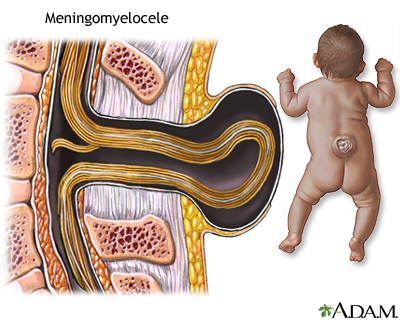
The vertebra and neural tube close incomplete resulting in a saclike protrusion in the lumbar or sacral area. The defect includes meningocele, myelomeningocele, lipomeningocele, and lipomeningomyelocele.

3. Meningocele
The protrusion involves meninges and a saclike cyst that contains CSF in the midline of the back. Spinal cord is not involved and neurological deficits are usually not present.

4. Myelomeningocel
The protrusion involves meninges, CSF, nerve roots, and spinal cord. The sac is covered by a thin membrane that is prone to leakage or rupture. Neurological deficit are evident.


Signs and Symptoms:

  • Visible spinal defect
  • Flaccid paralysis of the legs
  • Hip and joint deformities
  • Altered bladder and bowel function
  • Specific signs and symptoms depend on the spinal cord involvement

Nursing Intervention:
  • Assess the sac and measure the lesion
  • Assess neurological system
  • Assess and monitor for increasing ICP
  • Measure head circumferences
  • Protect the sac, cover with a sterile, moist (normal saline), nonadherent dressing and change the dressing every 2-4 hours
  • Place patient in prone position and head to one side
  • Use antiseptic technique
  • Assess and monitor the sac for redness, clear or purulent drainage, abrasions, irritation, and signs of infection
  • Assess for hip and joint deformities
  • Administer medication: antibiotics, anticholinergics, and laxatives as prescribed

29 November 2008

Hydrocephalus


Hydrocephalus is a condition marked by an excessive accumulation of cerebrospinal fluid resulting in dilation of the cerebral ventricles and raised intracranial pressure; may also result in enlargement of the cranium and atrophy of the brain.

There are two types of hydrocephalus: communicating and non-communicating.

Communicating Hydrocephalus:
  • It occurs as a result of impaired absorption within the subarachnoid space
  • Interference of the cerebrospinal fluid within the ventricular system does not occur

Non-communicating Hydrocephalus:
  • It is an obstruction of cerebrospinal flow within the ventricular system.

Signs and Symptoms Hydrocephalus in Infant:

  • Increased head circumference
  • Macewen’s sign: thin, widely separated bones of the head that produce a cracked-pot sound on percussion
  • Dilated scalp vein
  • Frontal bossing
  • Sunsetting eyes
  • Anterior fontanel tense, bulging, and non pulsating

Signs and Symptoms Hydrocephalus in Child:
  • Changes of behavior: irritability and lethargy
  • Nausea and vomiting
  • Headache on awakening
  • Ataxia
  • Nystagmus

Surgical Intervention:
Surgical intervention of Hydrocephalus is to prevent further CSF accumulation by bypassing the blockage and draining the fluid from the ventricles to a location where it can be reabsorbed. There are two types of surgical intervention: Ventriculoperitoneal Shunt and Atrioventricular Shunt.
  1. Ventriculoperitoneal Shunt: the CSF drains from the lateral ventricles into the peritoneal cavity.
  2. Atrioventricular Shunt: the CSF drains into the right atrium of the heart from the lateral ventricle, bypassing the obstruction. It is mostly used in older children and in children with pathological conditions of the abdomen.


Nursing Intervention (post-op)
  • Monitor and assess vital signs and neurological signs
  • Position client on the un-operated side to prevent pressure on the shunt valve
  • Keep the child flat: to avoid rapid reduction of intracranial fluid
  • Observe for increased ICP, if ICP is increased, elevate the head of the bed to 15-30 degrees
  • Monitor for signs of infections
  • Assess dressings for drainage
  • Monitor intake and output
  • Measure head circumference
  • Administer medications as prescribed
  • Teach parents how to recognize shunt infection and shunt malfunction

27 November 2008

Head Injury in Children

Head injury is pathological result of any mechanical force to the skull, scalp, meninges, or brain. The manifestations of head injury depend on the type of injury and the amount of increased intracranial pressure (ICP).


Sign and Symptoms of Head Injury:

Early Signs:
  • Headache
  • Nausea and vomiting
  • Visual disturbances and diplopia
  • Slight changes in vital signs
  • Dizziness or vertigo
  • Change in pupillary response and equality
  • Slight change in level of consciousness
  • Signs in infants: bulging fontanel, wide sutures, increased head circumference, high pitched cry, and dilated scalp vein
Late Signs:
  • Cushing’s triad: increased systolic blood pressure and widened pulse pressure, bradycardia, and irregular respiration
  • Significant decrease in level of consciousness
  • Decorticate posturing (see picture)
  • Decerebrate posturing (see picture)
  • Fixed and dilated pupils


Nursing Intervention in Head Injury:

  1. Monitor and assess the airway, breathing, and circulations
  2. Assess the injury and immobilize the neck if a cervical injury is suspected
  3. Monitor vital signs and neurological function
  4. Monitor level of consciousness
  5. Initiate seizure precaution
  6. Keep patient a nothing by mouth status until determined that vomiting will not occur
  7. Administer oxygen and intravenous fluid as prescribed
  8. Elevate the head of bed at 15-30 degrees if not contraindicated
  9. Keep head in midline position to facilitate venous drainage and avoid jugular vein compression
  10. Monitor for nose or ear drainage which could indicate leakage of cerebrospinal fluid (CSF) as a sign of skull fracture
  11. Avoid suctioning through the nares
  12. Administers acetaminophen (Tylenol) for headache, anticonvulsants for seizures, antibiotic, and tetanus toxoid as prescribed
  13. Monitor for signs of brainstem involvement: deep, rapid, or intermittent and gasping respirations; wide fluctuations or noticeable slowing of the pulse; widening pulse pressure or extreme fluctuations in blood pressure
  14. Monitor for epidural hematoma: asymmetric pupils